
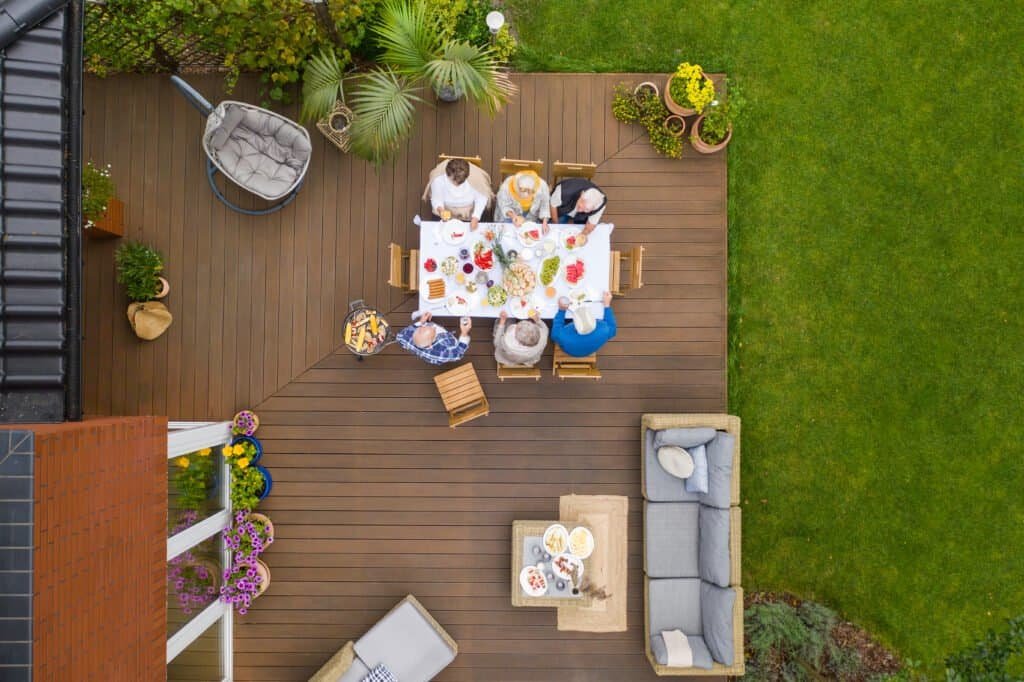
The first question on almost every deck project is the surface: natural wood or composite boards. Both make a good deck. They differ in what they cost at the start, what they ask of you afterwards and how they look in ten years.
Wood
Wood is the traditional choice and usually the cheaper one to build. It is warm underfoot, takes stain in any colour and can be sanded and refinished when it looks tired. The trade-off is upkeep: a wood deck needs cleaning and re-sealing every few years, and boards that are neglected will grey, crack and eventually rot.
Composite
Composite boards are made from wood fibre and plastic. They cost more to buy, but they do not need staining or sealing and they resist rot and insects. An occasional wash is the whole maintenance routine. They cannot be refinished, so the colour you choose is the colour you keep, and darker boards get warm in full sun.
How to decide
- Budget now versus later: wood is cheaper to build, composite is cheaper to own.
- Time: if you will not re-seal a deck every few years, choose composite.
- Sun: on a fully exposed deck, pick a lighter colour in either material.
- Look: if you want the grain and feel of real timber, nothing replaces wood.
Whichever surface you choose, the frame underneath is what makes a deck safe. Posts, footings and connections deserve as much attention as the boards you see. We price both options on every deck estimate so you can compare them side by side.
 October 2026Wood, vinyl or metal: choosing the right fenceStart with what the fence is for. Privacy, security, pets and looks each point to a different material and height. A short guide to getting it right.Read article
 October 2026Drip or sprinklers? Matching irrigation to your yardMost yards need both. Sprinklers for lawn, drip for everything else — and a schedule that waters deeply and less often through the dry season.Read article
 October 2026Is artificial grass right for your yard?Synthetic turf saves water and weekends, but it is not the answer for every yard. What it does well, where it falls short and what a good installation involves.Read article