
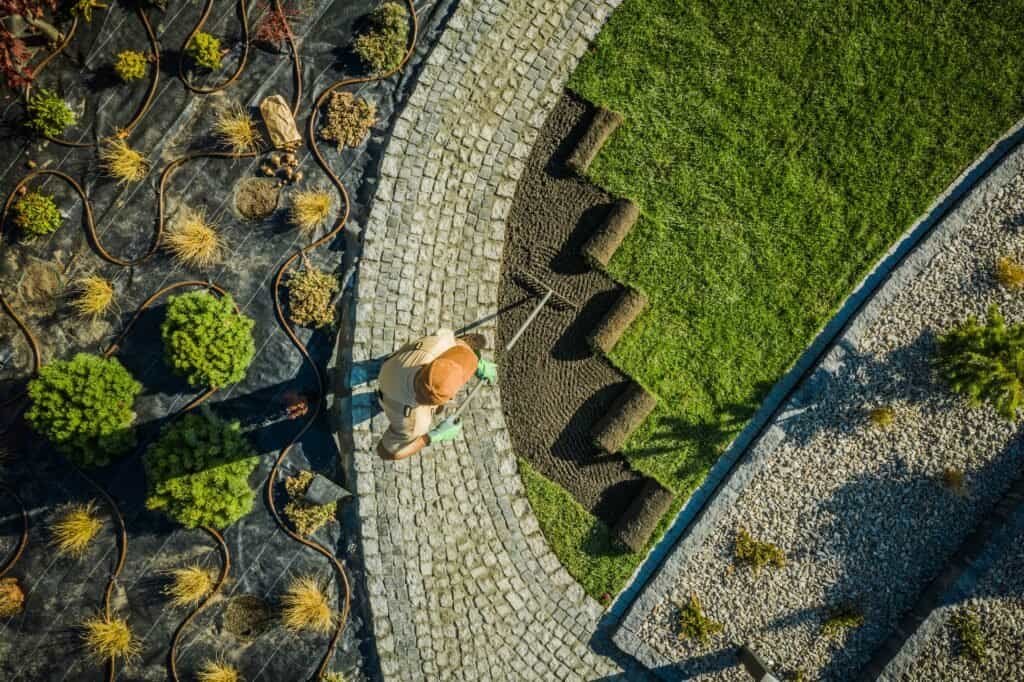
A lawn that stays green without water, mowing or fertiliser has obvious appeal in a dry climate. Artificial grass delivers that, with a few trade-offs worth knowing before you commit.
What it does well
- Stays green and even all year, in sun or shade.
- Needs no irrigation, mowing or feeding.
- Handles heavy use from children and pets without bare patches or mud.
- Works in narrow side yards and corners where real grass struggles.
Where it falls short
Turf gets warmer than living grass in direct summer sun, which matters for bare feet and paws in a yard with no shade. It is not maintenance-free either: leaves need clearing, pet areas need rinsing and busy patches need brushing up now and then. And it is a manufactured surface, so it does not cool the yard or feed the soil the way planting does.
The base is the installation
Most problems with artificial grass — dips, wrinkles, puddles, visible seams — come from what is underneath. A good installation removes the old lawn, grades the ground, compacts a draining base and secures every seam and edge. That preparation is most of the work and most of the result.
A middle path
It does not have to be all or nothing. Many yards work best with turf where people walk and play, and low-water planting on drip around it.
Related services
 October 2026Wood vs. composite decking: how to chooseWood costs less to build and composite costs less to keep. Here is how the two compare on looks, upkeep and lifespan, and how to decide which suits your yard.Read article
 October 2026Wood, vinyl or metal: choosing the right fenceStart with what the fence is for. Privacy, security, pets and looks each point to a different material and height. A short guide to getting it right.Read article
 October 2026Drip or sprinklers? Matching irrigation to your yardMost yards need both. Sprinklers for lawn, drip for everything else — and a schedule that waters deeply and less often through the dry season.Read article