
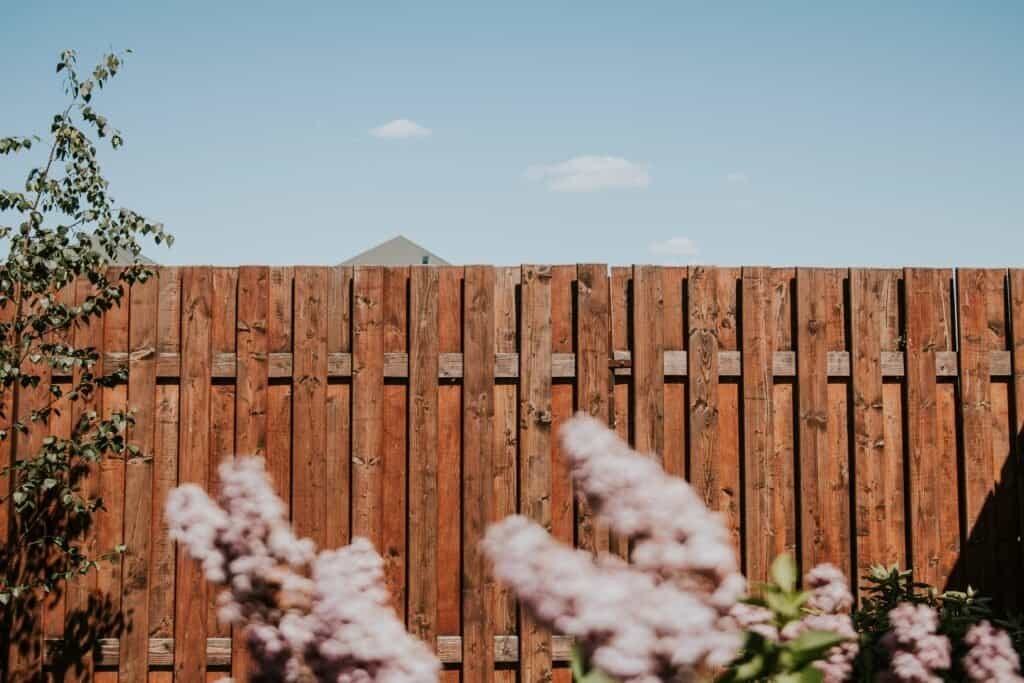
A fence is one of the most visible things you will add to a property and one of the longest-lived, so it is worth choosing on purpose. Begin with the job it has to do.
Start with the purpose
- Privacy: solid boards or panels, tall enough to block the sightline that bothers you.
- Security and pets: no gaps at the bottom, and gates that latch on their own.
- Marking a boundary or framing a garden: a lower, more open style is enough.
The materials
Wood is the most common choice. It is economical, suits almost any house and can be stained or painted, but it needs sealing to last and will eventually weather. Vinyl costs more and needs almost no upkeep beyond washing. Metal — ornamental steel or aluminium — is the most durable and the most open, so it secures a yard without giving privacy.
What makes a fence last
Posts. A fence fails where the posts meet the ground, long before the boards wear out. Posts set deep in concrete, kept clear of standing water, are what keep a fence straight in wind and wet winters. If a fence is leaning, a few failed posts are usually the cause, and replacing those can save the rest.
Before work starts
Check where the property line is, talk to the neighbour who shares it, and ask your city or homeowners' association about height limits. Sorting those out first avoids rebuilding later.
Related services
 October 2026Wood vs. composite decking: how to chooseWood costs less to build and composite costs less to keep. Here is how the two compare on looks, upkeep and lifespan, and how to decide which suits your yard.Read article
 October 2026Drip or sprinklers? Matching irrigation to your yardMost yards need both. Sprinklers for lawn, drip for everything else — and a schedule that waters deeply and less often through the dry season.Read article
 October 2026Is artificial grass right for your yard?Synthetic turf saves water and weekends, but it is not the answer for every yard. What it does well, where it falls short and what a good installation involves.Read article