
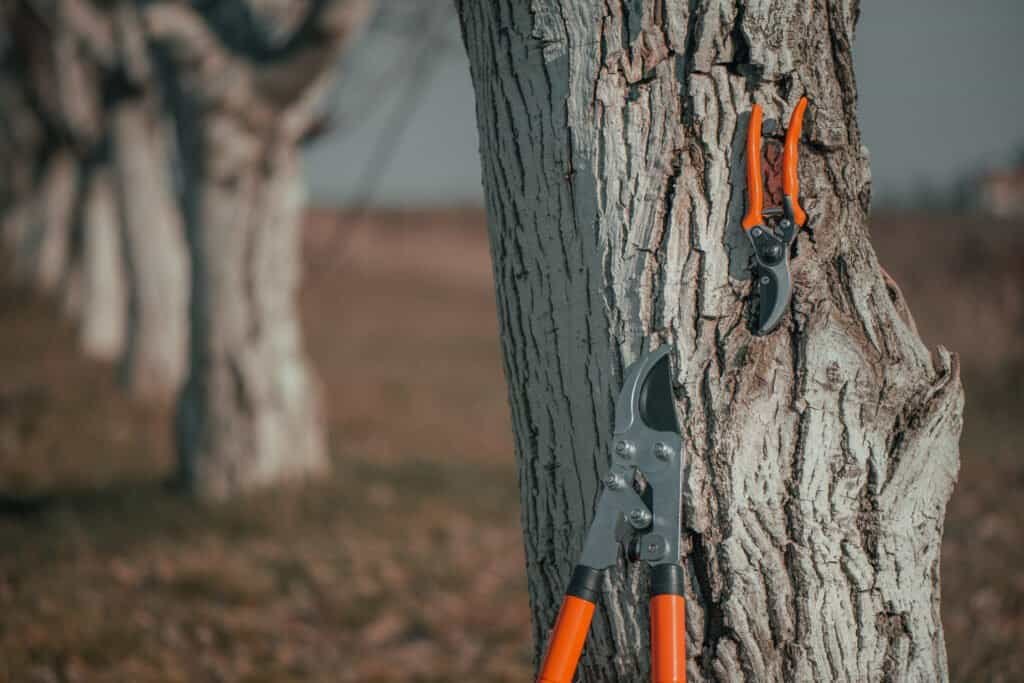
Trees left alone for years tend to announce themselves in a storm. A little pruning on a regular cycle is safer for the tree, the house and the people under it.
What pruning is for
- Safety: removing dead, cracked or overextended branches before they fall.
- Health: opening the crown to light and air, and taking out crossing or diseased wood.
- Clearance: keeping branches off roofs, fences, walkways and the neighbour's yard.
- Shape: guiding a young tree so it grows a strong structure.
When to do it
Timing depends on the species. Many trees are best pruned while dormant, when their structure is easy to see and they are under the least stress. Flowering trees are generally pruned after they bloom. Dead or hazardous branches are the exception to every rule: take them off as soon as you notice them.
How much is too much
Removing a large share of a tree's canopy in one visit weakens it and triggers a flush of fast, poorly attached shoots. Topping — cutting the main branches back to stubs — does the most harm of all. Lighter pruning, repeated every few years, gives a better tree.
When to call someone
Anything that needs a ladder and a saw at the same time, anything near power lines, and any branch heavy enough to damage what is below it is a job for a crew with the right equipment.
Related services
 October 2026Wood vs. composite decking: how to chooseWood costs less to build and composite costs less to keep. Here is how the two compare on looks, upkeep and lifespan, and how to decide which suits your yard.Read article
 October 2026Wood, vinyl or metal: choosing the right fenceStart with what the fence is for. Privacy, security, pets and looks each point to a different material and height. A short guide to getting it right.Read article
 October 2026Drip or sprinklers? Matching irrigation to your yardMost yards need both. Sprinklers for lawn, drip for everything else — and a schedule that waters deeply and less often through the dry season.Read article