
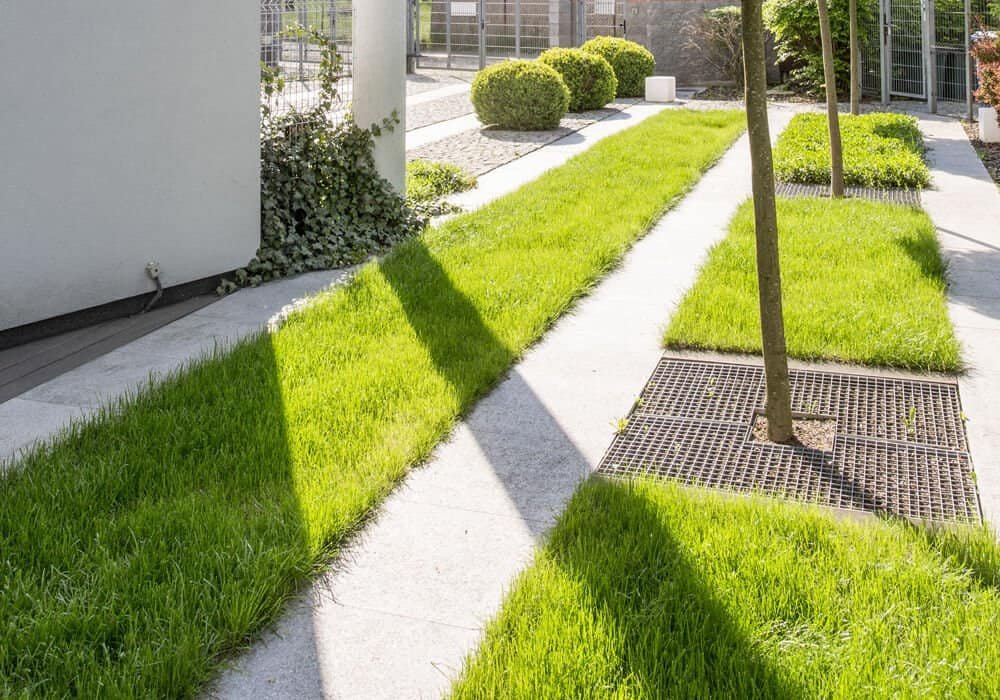
Both pavers and poured concrete make a solid, lasting surface. The right one depends on the look you want, how the area will be used and how you feel about repairs down the line.
Poured concrete
Concrete is one continuous slab. It is usually the more economical choice for a large area, it is easy to sweep and shovel, and it suits driveways, side yards and pads that have to carry weight. Its weakness is cracking: control joints guide where cracks form, but a slab that does crack or stain is difficult to patch invisibly.
Pavers
Pavers are individual units laid in a pattern over a compacted base. They cost more to install, and in return you get a wide choice of colour and pattern and a surface that flexes slightly instead of cracking. If one paver is damaged or the ground settles, that area can be lifted and re-laid without redoing the whole patio.
What both depend on
Ground preparation. Either surface laid over soft or poorly drained ground will fail. Excavation, a compacted base and a slope that carries water away from the house are what you are really paying for.
A quick way to choose
- Largest area for the budget, or heavy loads: concrete.
- Appearance first, or a patio you may extend later: pavers.
- Ground that moves, or tree roots nearby: pavers, because they can be re-levelled.
 October 2026Wood vs. composite decking: how to chooseWood costs less to build and composite costs less to keep. Here is how the two compare on looks, upkeep and lifespan, and how to decide which suits your yard.Read article
 October 2026Wood, vinyl or metal: choosing the right fenceStart with what the fence is for. Privacy, security, pets and looks each point to a different material and height. A short guide to getting it right.Read article
 October 2026Drip or sprinklers? Matching irrigation to your yardMost yards need both. Sprinklers for lawn, drip for everything else — and a schedule that waters deeply and less often through the dry season.Read article